
An archive for
what comes next.
Your DNA. Selected living cells. Your voice, stories and records. A proposed biological and digital archive, built around what can be preserved—and what the future may make possible.
Proposed program · In development · Enrollment is not open
Not an operating facility or validated device
Preserve the material.
Preserve the record.
Keep asking what’s next.
The Archive would coordinate professional biological storage and a carefully maintained digital record. One inventory. Separate preservation systems. Clear instructions about who may access them, and for what purpose.
A living starting point.
Defined samples, professional cryostorage and documented quality. Planned extensions include donor-derived stem-cell lines and selected research models.
↗02 / DIGITALA life, in its own words.
Original voice, video, writing and personal records. Preserve the source and its context before creating any representation from it.
↗03 / RESEARCHAn open frontier.
Investigate faithful AI representations, biological research models and possible robotic embodiment. Advance when the evidence supports it.
↗
More than
a sequence file.
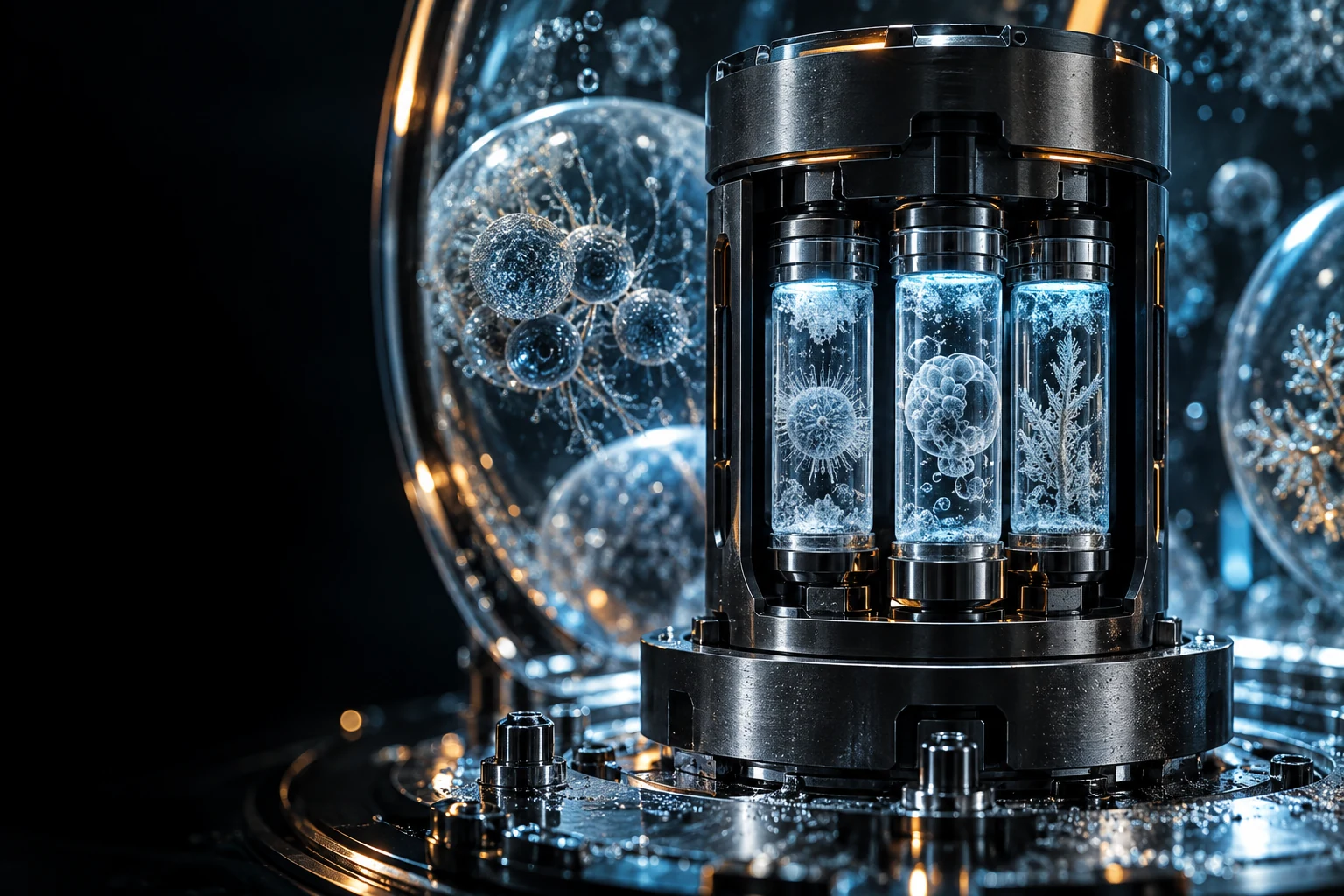
DNA storage, viable cell banking and stem-cell lines have different purposes. The proposed archive would specify what is held, how it was handled, and what evidence supports its future use.
Established component methods · Proposed Death X serviceExplore cell banking
A familiar presence.
An honest identity.
A future avatar could draw on a permissioned life archive. A robotic interface could give it a physical form. These are research directions for a representation—not demonstrated continuity of a person.
Research direction · No transfer of consciousness demonstratedExplore embodimentGenerated concept artwork. No image depicts an operating Death X facility or a validated product.
The future needs
milestones.
Dates set a direction. They do not guarantee a breakthrough. Each workstream needs a test, a result, and a reason to proceed.
An archive you
can verify.
- Define the specimen panel and qualify professional providers.
- Verify identity, appropriate recovery and digital-file integrity.
- Test consent, export and custody-transfer procedures.
- Publish exactly what has and has not been demonstrated.
A representation
you can inspect.
- Use authorized originals as the reference record.
- Measure unsupported claims and source attribution.
- Test permission controls and the ability to decline unknown answers.
- Keep synthetic speech and generated statements identifiable.
A physical interface.
A new set of tests.
- Evaluate a permissioned representation through a robotic interface.
- Test safety, response fidelity and bystander understanding.
- Publish independent evaluation before making performance claims.
- Keep consciousness and biological identity claims separate.
Start with your
most important question.
Follow the material, the record, the rights or the research. Each guide explains the purpose, the evidence and the limits.
Know what is
actually in the vault.
A family should be able to inspect an archive’s contents and responsibilities. The proposed member record would link the following items.